


对应路线图:Phase 1 (Day 22-49) | DPDK 24.11.6 LTS | 内核对照 v6.6
代码出处:source/dpdk-stable-24.11.6/lib/ring/,引用均标文件:行号
上一篇:P1-02 mempool | 下一篇:P1-04 mbuf
一句话定位
rte_ring 是 DPDK 的"万能胶":mempool 的默认后端是它,进程间通信用它,P3 的 LB 分发用它。理解 ring = 理解 CAS 抢占 + tail 有序发布 这套无锁队列范式。
真实结构(lib/ring/rte_ring_core.h)
/** prod/cons sync types */
enum rte_ring_sync_type {                                   // rte_ring_core.h:53
    RTE_RING_SYNC_MT,     /**< multi-thread safe (default mode) */
    RTE_RING_SYNC_ST,     /**< single thread only */
    RTE_RING_SYNC_MT_RTS, /**< multi-thread relaxed tail sync */
    RTE_RING_SYNC_MT_HTS, /**< multi-thread head/tail sync */
};

struct rte_ring_headtail {                                  // rte_ring_core.h:65
    volatile RTE_ATOMIC(uint32_t) head;      /**< prod/consumer head. */
    volatile RTE_ATOMIC(uint32_t) tail;      /**< prod/consumer tail. */
    union {
        enum rte_ring_sync_type sync_type;
        uint32_t single;
    };
};

struct rte_ring {                                           // rte_ring_core.h:116
    alignas(RTE_CACHE_LINE_SIZE) char name[RTE_RING_NAMESIZE];
    int flags;
    const struct rte_memzone *memzone;
    uint32_t size;           /**< Size of ring. */
    uint32_t mask;           /**< Mask (size-1) of ring. */
    uint32_t capacity;       /**< Usable size of ring */

    RTE_CACHE_GUARD;

    /** Ring producer status. */
    union __rte_cache_aligned {
        struct rte_ring_headtail prod;
        struct rte_ring_hts_headtail hts_prod;
        struct rte_ring_rts_headtail rts_prod;
    };

    RTE_CACHE_GUARD;

    /** Ring consumer status. */
    union __rte_cache_aligned {
        struct rte_ring_headtail cons;
        struct rte_ring_hts_headtail hts_cons;
        struct rte_ring_rts_headtail rts_cons;
    };

    RTE_CACHE_GUARD;
};结构注释里藏着核心设计(rte_ring_core.h:106-115):
head/tail 不是 0..size-1 之间的值,而是 0..2^32-1,访问 ring[] 时才用 mask。因此两个 uint32 索引的减法在模 32 位意义下永远正确,溢出不是问题。布局要点:prod 和 cons 各占独立 cache line(RTE_CACHE_GUARD 隔离)——生产者只写 prod 行,消费者只写 cons 行,双方互不挤占对方的缓存行。size 必须 2 的幂 → & mask 替代 % size。
入队四步:对真实代码逐行讲
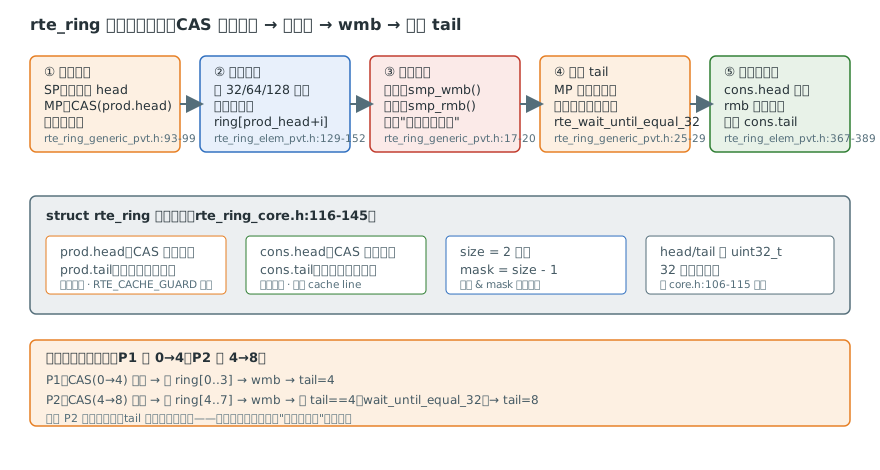
第 ① 步 · 抢占区间(lib/ring/rte_ring_generic_pvt.h:55-101,节选):
static __rte_always_inline unsigned int
__rte_ring_move_prod_head(struct rte_ring *r, unsigned int is_sp,
        unsigned int n, enum rte_ring_queue_behavior behavior,
        uint32_t *old_head, uint32_t *new_head,
        uint32_t *free_entries)
{
    const uint32_t capacity = r->capacity;
    // ...
    do {
        n = max;
        *old_head = r->prod.head;

        /* add rmb barrier to avoid load/load reorder in weak
         * memory model. It is noop on x86
         */
        rte_smp_rmb();                          // :74

        /*
         *  The subtraction is done between two unsigned 32bits value
         *  (the result is always modulo 32 bits ...). So 'free_entries'
         *  is always between 0 and capacity (which is < size).
         */
        *free_entries = (capacity + r->cons.tail - *old_head);   // :82

        if (unlikely(n > *free_entries))
            n = (behavior == RTE_RING_QUEUE_FIXED) ?
                    0 : *free_entries;
        if (n == 0)
            return 0;

        *new_head = *old_head + n;
        if (is_sp) {
            r->prod.head = *new_head;           // SP:普通写即可
            success = 1;
        } else
            success = rte_atomic32_cmpset((uint32_t *)&r->prod.head,
                    *old_head, *new_head);  // MP:CAS 抢区间
    } while (unlikely(success == 0));
    return n;
}
第 ② 步 · 写入对象:__rte_ring_enqueue_elems(rte_ring_elem_pvt.h:129-152)按元素大小分派 32/64/128 字节三档批量复制——定长批量 copy,编译器可向量化。
第 ③④ 步 · 屏障 + 发布 tail(rte_ring_generic_pvt.h:13-30,全文):
static __rte_always_inline void
__rte_ring_update_tail(struct rte_ring_headtail *ht, uint32_t old_val,
        uint32_t new_val, uint32_t single, uint32_t enqueue)
{
    if (enqueue)
        rte_smp_wmb();
    else
        rte_smp_rmb();
    /*
     * If there are other enqueues/dequeues in progress that preceded us,
     * we need to wait for them to complete
     */
    if (!single)
        rte_wait_until_equal_32((volatile uint32_t *)&ht->tail, old_val,
            rte_memory_order_relaxed);

    ht->tail = new_val;
}
两个知识点:
- wmb/rmb 的选择:入队前
wmb(对象内容先于 tail 发布可见),出队前rmb(读到发布后的 tail 才读对象)。 - MP 场景的按序发布:
rte_wait_until_equal_32等前一个生产者的 tail 到old_val再写自己的——即使 P2 先写完数据,tail 也只能按序发布,消费者看到的永远是有序完整的数据。这就是"head 无锁抢占、tail 顺序发布"的完整语义。
入队主循环(rte_ring_elem_pvt.h:320-341,全文):
static __rte_always_inline unsigned int
__rte_ring_do_enqueue_elem(struct rte_ring *r, const void *obj_table,
        unsigned int esize, unsigned int n,
        enum rte_ring_queue_behavior behavior, unsigned int is_sp,
        unsigned int *free_space)
{
    uint32_t prod_head, prod_next;
    uint32_t free_entries;

    n = __rte_ring_move_prod_head(r, is_sp, n, behavior,
            &prod_head, &prod_next, &free_entries);
    if (n == 0)
        goto end;

    __rte_ring_enqueue_elems(r, prod_head, obj_table, esize, n);

    __rte_ring_update_tail(&r->prod, prod_head, prod_next, is_sp, 1);
end:
    // ...
    return n;
}出队是完美镜像(rte_ring_elem_pvt.h:367-389):move_cons_head → dequeue_elems → update_tail(cons, ..., 0)。
变体一句话
- RTS(Relaxed Tail Sync):head/tail 以
(cnt, pos)打包成 64 位原子(rte_ring_core.h:76-83),生产者可提前发布,靠 watermark 背压——用容量利用率换更少的缓存行竞争。 - HTS(Head/Tail Sync):head/tail 打包进一个 64 位原子(
rte_ring_core.h:92-104),一次原子操作同时读两个值。 - 两阶段 peek API:
rte_ring_enqueue_peek占位 → 逐包填充(填不下就丢)→rte_ring_enqueue_do_commit发布,适合网卡收包场景。
🐧 内核对照:kfifo 与 RCU
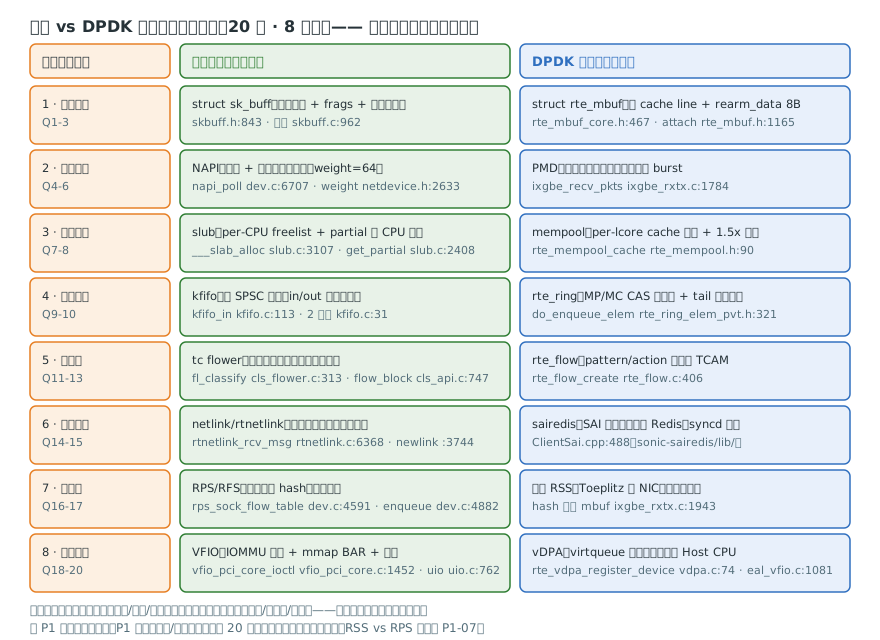
kfifo(lib/kfifo.c) 是内核最接近 ring 的通用无锁 FIFO,屏障用法一一对应:
static void kfifo_copy_in(struct __kfifo *fifo, const void *src,
        unsigned int len, unsigned int off)          // kfifo.c:88
{
    // ... memcpy 两段(处理回绕) ...
    /*
     * make sure that the data in the fifo is up to date before
     * incrementing the fifo->in index counter
     */
    smp_wmb();                                        // kfifo.c:110
}

unsigned int __kfifo_in(struct __kfifo *fifo,
        const void *buf, unsigned int len)            // kfifo.c:113
{
    unsigned int l;

    l = kfifo_unused(fifo);
    if (len > l)
        len = l;

    kfifo_copy_in(fifo, buf, len, fifo->in);
    fifo->in += len;                                  // "发布"
    return len;
}
出队侧 kfifo_copy_out 同样在 out 前 smp_wmb()(kfifo.c:145-150)。与 ring 的差异:kfifo 是 SPSC 假设(in/out 各一人写),ring 用 CAS 把同样的屏障范式扩展到了 MP/MC。
RCU(kernel/rcu/):另一种"免锁"哲学——读方零开销,写方延迟回收。ring 的免锁是队列语义(生产者-消费者互不阻塞);RCU 的免锁是发布-订阅语义(读者随时读,写者保证读者不踩到已释放内存)。面试能讲出这个区别是加分项。
面试 3 问
- 画 4 线程并发 enqueue 时序图,tail 最后是多少? → 各线程 CAS 抢到互不重叠区间;tail 按
wait_until_equal_32顺序推进,最终 = 实际入队总数。 - 少一条 wmb 会怎样? → 消费者可能先看到 tail 发布再读到未写完的对象(数据竞争),且只在多核乱序窗口偶现,极难复现——所以源码注释必须写清屏障"保护什么"。
- head/tail 为什么用 uint32 且允许回绕? → 模 32 位减法天然正确(
rte_ring_core.h:106-115注释),省掉回绕判断。
🔧 动手实验
扩展 code/ring-bench/:SPSC/MPSC/MPMC × 1/2/4/8 producer 吞吐+延迟矩阵。预期曲线:SPSC 最快(无 CAS 无等待),MPMC 在 8 生产者时见顶——数据留档 perf-data/P1/,这就是"热路径要 per-core 数据结构"的实证。
评论 (0)